
— Products — Rotary actuator
Remove the gearbox. Lighten the aircraft.
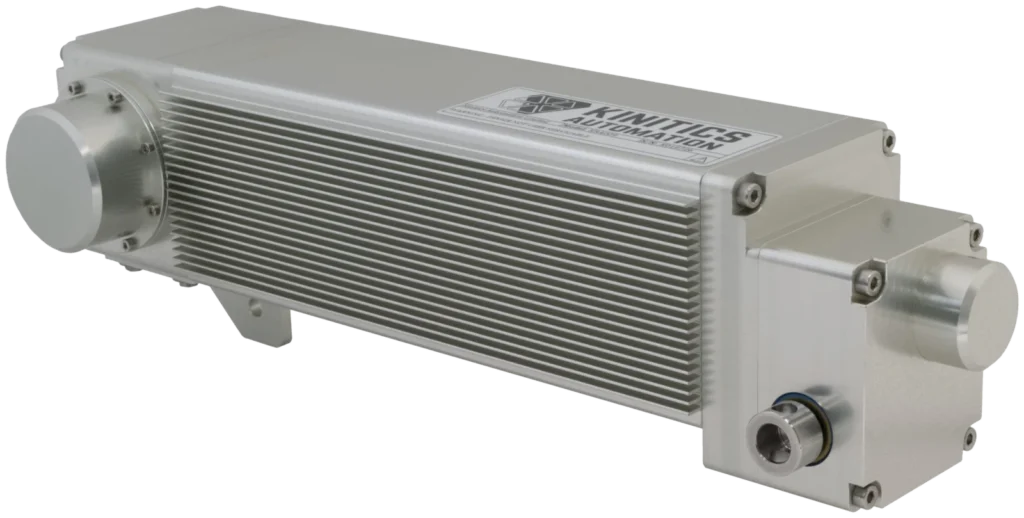
A fully electric, direct-drive rotary actuator. One primary moving part. No gearing, no hydraulics.
— The technology
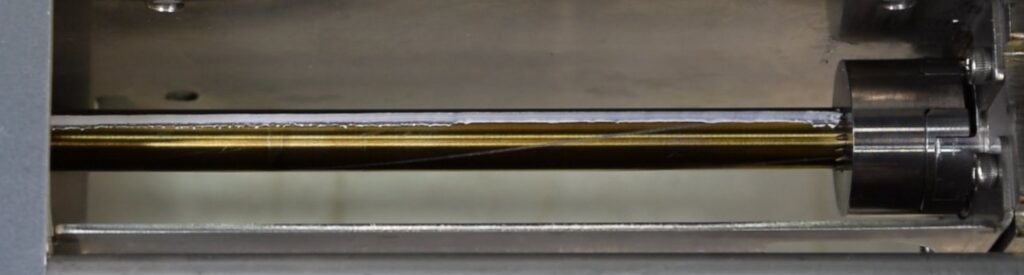
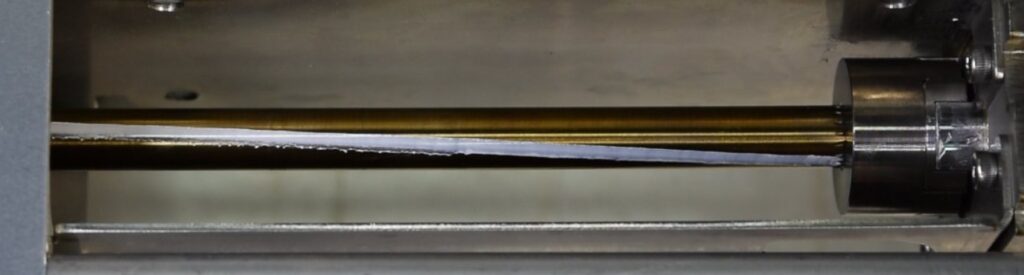
Motion without machinery. Shape Memory Alloys are metals that change shape when heated and recover when cooled. Inside the KRA, an SMA torsion tube twists to produce rotary motion directly: heating the tube electrically drives the output shaft through its stroke, and cooling returns it.
Because the SMA element is itself the motion driver, there is no motor and no gear train to package, lubricate, or qualify. The result is a sealed, quiet, solid-state actuator with exceptional work density.
The architecture scales. SMA torsion tubes from 2.5 mm to 38 mm [0.1″ to 1.5″] outer diameter have been manufactured and tested across four orders of magnitude of torque — from 1.7 to 1,700 N·m [15 to 15,000 in-lbs] — increasing commonality within and across product lines.
For aerospace, work density is the headline: high output per unit mass means significant weight savings against electric motor and hydraulic alternatives — and weight is fuel.
Proven scalability
Why it matters
Fewer parts. Lower mass. Higher reliability.
Solid-state actuation replaces the failure modes of gears, brushes, and hydraulic seals with a single engineered element — simplifying maintenance and the reliability story alike.
— Features & configurations
Specified at order. Every KRA is built from a configurable platform. Feedback, travel, default behaviour, and mechanical packaging are selected at time of order — so the unit that arrives is the unit the application needs.
Integral limit switches report end-of-travel state as standard. Position feedback options allow output angle to be monitored continuously for closed-loop control and health monitoring.
On loss of power the KRA returns to a defined fail-safe position. Default position and direction of rotation are configurable — open or closed, clockwise or counter-clockwise.
Fine trim adjustment allows end positions to be set precisely at installation, aligning actuator travel to the driven mechanism without shimming or linkage adjustment.
Choose a NEMA or ISO standard frame for drop-in mounting, or a frameless variant that integrates the actuator core directly into the surrounding structure.
With the positioner option, the KRA holds commanded intermediate positions within its 90° travel rather than operating two-position — with positional accuracy of 0.2°.
Optional internal hard stops bound the output travel mechanically, protecting the driven mechanism and providing a positive end-of-travel reference independent of the control system.
Program support
Kinitics supports aerospace programs with controlled documentation, requirement traceability, and revision-managed interfaces — from development units through line replaceable unit (LRU) deliveries.
The KRA’s reconfigurable design permits in-situ characterization of the SMA element, supporting element selection, acceptance testing, and qualification evidence — validated between Kinitics and customer laboratories.

— Case study · Ram air door actuator
Built to flight-test standard.
A joint Kinitics–Boeing weight savings study of commercial airplane architecture identified twenty-four actuator system types — thirty-one discrete actuators — in non-mission-critical applications where SMA-based actuators could replace existing electric motor or hydraulic units.
The KRA01 was developed as a line replaceable unit around an SMA torsion tube as the primary motion driver. Rotary output couples directly to the existing driven shaft, simplifying the ram air door mechanism. Electrically powered, fully self-contained and environmentally sealed, it interfaces with the airplane’s mechanical, structural, electrical, and environmental systems.
Flight-test hardware — the KRA01, in-flight performance sensors, and support electronics — completed system vibration testing and was prepared for assembly into a 777-200 aircraft. The actuator’s reconfigurable design also served as an in-situ SMA element test stand, with results validated between Kinitics and Boeing laboratories.
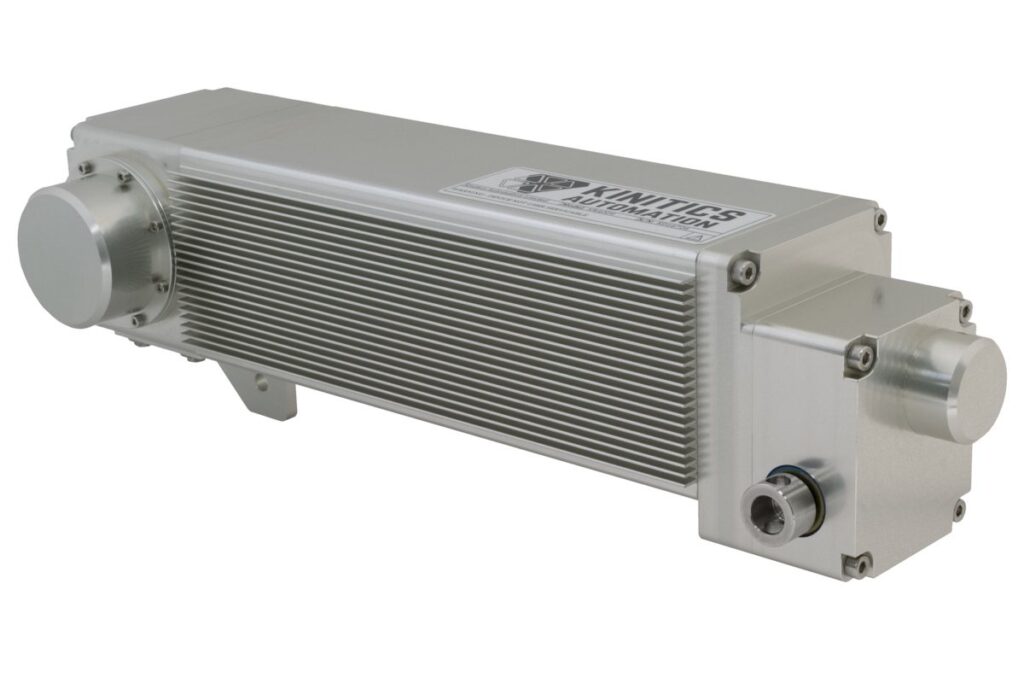
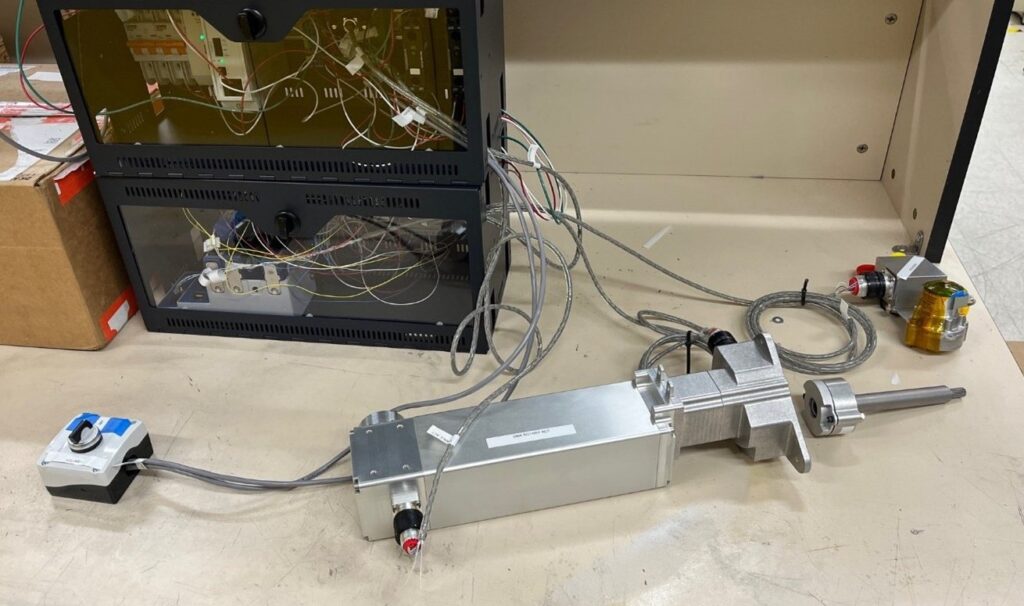
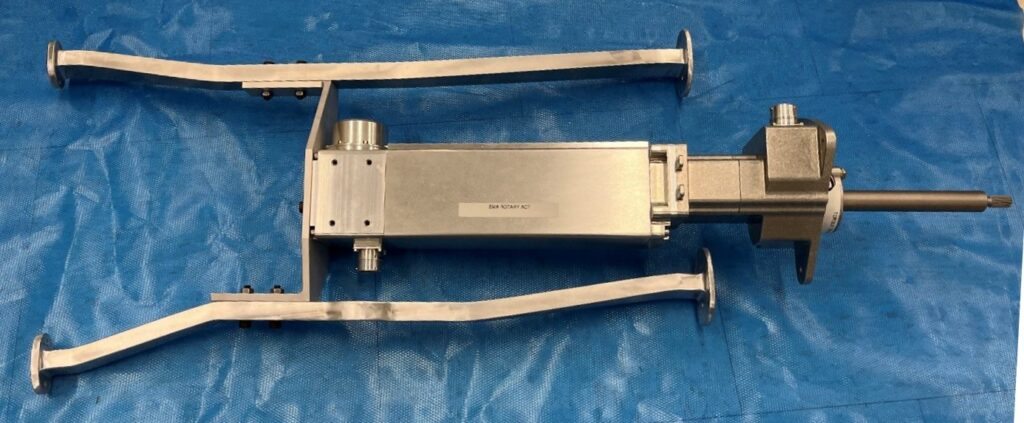
Figures from the peer-reviewed study published in Shape Memory and Superelasticity 11, 663–668 (2025), Pick et al., with Boeing Research & Technology and Boeing Commercial Airplanes. Read the story